 Australia
 Bangladesh
 Belgium
 Brazil
 Canada
 China
 Egypt
 France
 Germany
 India
 Indonesia
 Ireland
 VAQORA
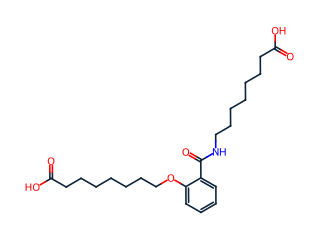
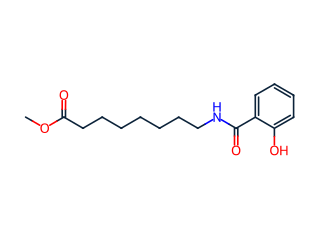
8-(2-Carbamoylphenoxy)octanoic Acid
CAS No.338994-19-7
FormulaC15H21NO4
Mol. weight279.34
Catalogue No.VQ-045017
PurityReference Standard
HSN38229090
8-(2-Carbamoylphenoxy)octanoic Acid (CAS 338994-19-7) – Salcaprozate impurity standard. C15H21NO4, MW 279.34. Vaqora Chemicals: COA, global shipping.
Pack sizesPrice on quotation · bulk available
10 mg
25 mg
50 mg
100 mg
Bulk / custom pack · kg to MT
Enquire Batch COA with every lot
16-section GHS SDS
Export to 120+ countries
DG-compliant packing
About 8-(2-Carbamoylphenoxy)octanoic Acid
8-(2-Carbamoylphenoxy)octanoic Acid is an impurity of Salcaprozate carrying the CAS registry number 338994-19-7. With the molecular formula C15H21NO4, it has a molar mass of 279.34 g/mol.
It is supplied as a solid. Reference materials should be stored sealed and away from light and moisture, as specified on the accompanying COA. Good laboratory practice and suitable PPE are recommended during handling.
As a characterised impurity of Salcaprozate, it is used for analytical method development, method validation (AMV) and routine quality-control testing, and it supports ANDA and DMF regulatory filings. Buyers come mainly from pharmaceutical manufacturing and academic and industrial research.
Vaqora Chemicals supplies 8-(2-Carbamoylphenoxy)octanoic Acid in 10 mg, 25 mg, 50 mg and 100 mg packs, each shipped with a Certificate of Analysis (COA), and exports worldwide.
Typical applications
- Analytical method development
- Method validation (AMV)
- QC release testing
- ANDA / DMF filings
Industries
Related to Salcaprozate
View every impurity, metabolite and intermediate we list for Salcaprozate.
Salcaprozate impuritiesSpecifications & identifiers
| Product name | 8-(2-Carbamoylphenoxy)octanoic Acid |
|---|---|
| Catalogue No. | VQ-045017 |
| CAS Number | 338994-19-7 |
| Molecular formula | C15H21NO4 |
| Molecular weight | 279.34 g/mol |
| Grade | Reference Standard |
| HSN code | 38229090 |
| Physical form | Solid |
|---|
Documents
Frequently asked questions
What is the CAS number of 8-(2-Carbamoylphenoxy)octanoic Acid?
The CAS Registry Number of 8-(2-Carbamoylphenoxy)octanoic Acid is 338994-19-7.
What is the molecular formula and molecular weight of 8-(2-Carbamoylphenoxy)octanoic Acid?
8-(2-Carbamoylphenoxy)octanoic Acid has the molecular formula C15H21NO4 and a molecular weight of 279.34 g/mol.
What is 8-(2-Carbamoylphenoxy)octanoic Acid used for?
8-(2-Carbamoylphenoxy)octanoic Acid is supplied as a characterised reference material related to Salcaprozate. It is used for analytical method development and validation (AMV), impurity profiling, stability studies and quality control, and in ANDA/DMF regulatory filings.
Which grade and pack sizes of 8-(2-Carbamoylphenoxy)octanoic Acid can I order?
We supply 8-(2-Carbamoylphenoxy)octanoic Acid in Reference Standard grade, in 10 mg, 25 mg, 50 mg, 100 mg packs. Larger bulk quantities and custom packing are quoted on request.
Do you provide a COA and SDS with 8-(2-Carbamoylphenoxy)octanoic Acid?
Yes. Every lot of 8-(2-Carbamoylphenoxy)octanoic Acid is shipped with a batch-specific Certificate of Analysis, and a 16-section GHS Safety Data Sheet is provided with the quotation and the shipment.
Can 8-(2-Carbamoylphenoxy)octanoic Acid be shipped internationally?
Yes. We export 8-(2-Carbamoylphenoxy)octanoic Acid worldwide by air and sea freight or express courier, on EXW, FOB, CIF, CFR or DAP Incoterms, with full export documentation.
Enquire about 8-(2-Carbamoylphenoxy)octanoic Acid
We reply within one business day with price, pack options, lead time and documentation.
Related products