 Australia
 Bangladesh
 Belgium
 Brazil
 Canada
 China
 Egypt
 France
 Germany
 India
 Indonesia
 Ireland
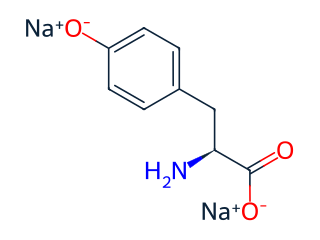
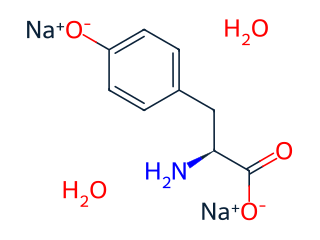
L-Tyrosine Disodium Salt Hydrate L-3-(4-Hydroxyphenyl) alanine disodium salt, cell culture tested
- CAS
- 69847-45-6
- Formula
- C9H9NNa2O3
- MW
- 225.15 g/mol
VQ-020270
 VAQORA
Synonyms: Aedelforsite · Wollastonite (Ca(SiO3)) · Cab-O-lite · Gillebachite
Calcium Silicate, plant tissue culture tested (CAS 10101-39-0) – cell culture reagent, Plant Culture grade. CaO3Si, MW 116.16. With COA, ships worldwide.
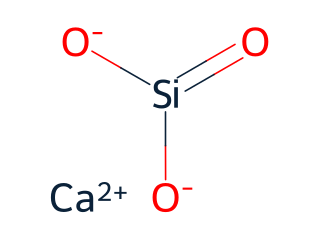
Listed under CAS 10101-39-0, Calcium Silicate, plant tissue culture tested is a cell culture reagent available from Vaqora Chemicals in Plant Culture grade. Its molecular formula is CaO3Si and its molecular weight is 116.16 g/mol. The IUPAC name is calcium dioxido(oxo)silane. Alternative names: Aedelforsite and Wollastonite (Ca(SiO3)).
Store in a tightly closed container in a cool, dry and well-ventilated place. The GHS classification uses the signal word “Warning”, so appropriate gloves, eye protection and ventilation are recommended.
It is commonly used for cell culture, media supplementation and cell-based assays. It is used across academic and industrial research and diagnostics and biotechnology.
Available in 25 g, 100 g and 500 g packs, Calcium Silicate, plant tissue culture tested is dispatched with a Certificate of Analysis (COA) to destinations worldwide.
| Product name | Calcium Silicate, plant tissue culture tested |
|---|---|
| Catalogue No. | VQ-020271 |
| CAS Number | 10101-39-0 |
| IUPAC name | calcium dioxido(oxo)silane |
| Molecular formula | CaO3Si |
| Molecular weight | 116.16 g/mol |
| Exact mass | 115.9243 |
| Grade | Plant Culture |
| InChIKey | OYACROKNLOSFPA-UHFFFAOYSA-N |
| SMILES | [O-][Si](=O)[O-].[Ca+2] |
| PubChem CID | 26370 |
| Physical form | Other |
|---|---|
| H-bond donors / acceptors | 0 / 3 |
| TPSA | 63.2 Ų |
| Synonyms | Aedelforsite, Wollastonite (Ca(SiO3)), Cab-O-lite, Gillebachite, Schalstein, Bistal, Rivaite, Vilnite, Tabular spar, Fibernite HG, Vansil W 10, Tremin (mineral) |

Signal word: Warning
H319Causes serious eye irritationH335May cause respiratory irritationPrecautionary statements: P261, P264 + P265, P271, P280, P304 + P340, P305 + P351 + P338, P319, P337 + P317, P403 + P233, P405, P501
Classification is indicative (aggregated GHS notifications) and may vary by grade and concentration. Always refer to the SDS supplied with your lot.
The CAS Registry Number of Calcium Silicate, plant tissue culture tested is 10101-39-0. It is also known as Aedelforsite, Wollastonite (Ca(SiO3)), Cab-O-lite.
Calcium Silicate, plant tissue culture tested has the molecular formula CaO3Si and a molecular weight of 116.16 g/mol. Its IUPAC name is calcium dioxido(oxo)silane.
We supply Calcium Silicate, plant tissue culture tested in Plant Culture grade, in 25 g, 100 g, 500 g packs. Larger bulk quantities and custom packing are quoted on request.
Yes. Every lot of Calcium Silicate, plant tissue culture tested is shipped with a batch-specific Certificate of Analysis, and a 16-section GHS Safety Data Sheet is provided with the quotation and the shipment.
Yes. Calcium Silicate, plant tissue culture tested is classified as hazardous, so it is packed in UN-approved packaging and shipped as dangerous goods under IATA/IMDG rules. We export worldwide on EXW, FOB, CIF and DAP terms.
We reply within one business day with price, pack options, lead time and documentation.