 VAQORA
Potassium chloride, cell culture tested
Synonyms: Sylvite · Enseal · Slow-K · Muriate of potash
CAS No.7447-40-7
FormulaClK
Mol. weight74.55
Catalogue No.VQ-046433
PurityCell Culture
HSN28273990
Potassium chloride, cell culture tested (CAS 7447-40-7) – cell culture reagent, Cell Culture grade. ClK, MW 74.55. Vaqora Chemicals: COA, global shipping.
Batch COA with every lot
16-section GHS SDS
Export to 120+ countries
DG-compliant packing
About Potassium chloride, cell culture tested
Vaqora Chemicals supplies Potassium chloride, cell culture tested in Cell Culture grade, a cell culture reagent registered under CAS number 7447-40-7. Its molecular formula is ClK and its molecular weight is 74.55 g/mol. The IUPAC name is potassium chloride. Alternative names: Sylvite and Enseal.
Store in a tightly closed container in a cool, dry and well-ventilated place. Good laboratory practice and suitable PPE are recommended during handling.
Typical applications include cell culture, media supplementation, cell-based assays and buffer preparation. Typical end-use sectors are academic and industrial research and diagnostics and biotechnology.
Standard pack sizes are 250 g, 500 g and 1 kg, and every batch ships with a Certificate of Analysis (COA) and we export worldwide. A Safety Data Sheet (SDS) and technical specifications are available on request.
Typical applications
- Cell culture
- Media supplementation
- Cell-based assays
- Buffer preparation
Industries
Specifications & identifiers
| Product name | Potassium chloride, cell culture tested |
|---|---|
| Catalogue No. | VQ-046433 |
| CAS Number | 7447-40-7 |
| IUPAC name | potassium chloride |
| Molecular formula | ClK |
| Molecular weight | 74.55 g/mol |
| Exact mass | 73.9326 |
| Grade | Cell Culture |
| HSN code | 28273990 |
| InChIKey | WCUXLLCKKVVCTQ-UHFFFAOYSA-M |
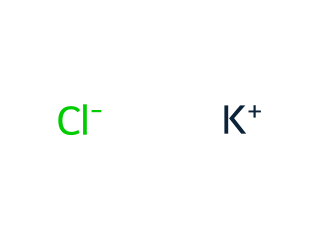
| SMILES | [Cl-].[K+] |
| PubChem CID | 4873 |
| Physical form | Other |
|---|---|
| H-bond donors / acceptors | 0 / 1 |
| TPSA | 0 Ų |
| Synonyms | Sylvite, Enseal, Slow-K, Muriate of potash, Neobakasal, Klor-Con, Acronitol, Potassium monochloride, K-Contin, Kay Ciel, Steropotassium, K-Lease |
Documents
Other grades of CAS 7447-40-7
Frequently asked questions
What is the CAS number of Potassium chloride, cell culture tested?
The CAS Registry Number of Potassium chloride, cell culture tested is 7447-40-7. It is also known as Sylvite, Enseal, Slow-K.
What is the molecular formula and molecular weight of Potassium chloride, cell culture tested?
Potassium chloride, cell culture tested has the molecular formula ClK and a molecular weight of 74.55 g/mol. Its IUPAC name is potassium chloride.
Which grade and pack sizes of Potassium chloride, cell culture tested can I order?
We supply Potassium chloride, cell culture tested in Cell Culture grade, in 250 g, 500 g, 1 kg packs. Larger bulk quantities and custom packing are quoted on request.
Do you provide a COA and SDS with Potassium chloride, cell culture tested?
Yes. Every lot of Potassium chloride, cell culture tested is shipped with a batch-specific Certificate of Analysis, and a 16-section GHS Safety Data Sheet is provided with the quotation and the shipment.
Can Potassium chloride, cell culture tested be shipped internationally?
Yes. We export Potassium chloride, cell culture tested worldwide by air and sea freight or express courier, on EXW, FOB, CIF, CFR or DAP Incoterms, with full export documentation.
Enquire about Potassium chloride, cell culture tested
We reply within one business day with price, pack options, lead time and documentation.
 Australia
 Bangladesh
 Belgium
 Brazil
 Canada
 China
 Egypt
 France
 Germany
 India
 Indonesia
 Ireland
Related products
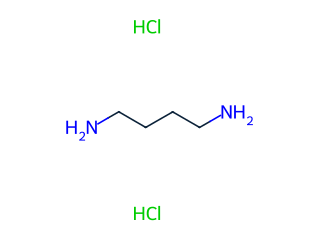
1,4-Diaminobutane dihydrochloride, cell culture tested
- CAS
- 333-93-7
- Formula
- C4H14Cl2N2
- MW
- 161.07 g/mol
VQ-046435