 Australia
 Bangladesh
 Belgium
 Brazil
 Canada
 China
 Egypt
 France
 Germany
 India
 Indonesia
 Ireland
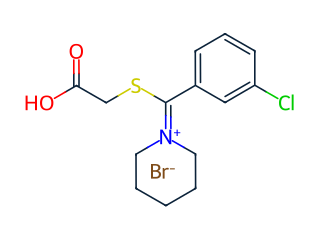
Streptavidin, from Streptomyces avidinii essentially salt-free, lyophilized powder, ≥13 units/mg protein
- CAS
- 9013-20-1
- Formula
- C14H17BrClNO2S
- MW
- 378.7 g/mol
VQ-012537
 VAQORA
Synonyms: tert-Butyl 5-bromo-3,4-dihydroisoquinoline-2(1H)-carboxylate · tert-butyl 5-bromo-1,2,3,4-tetrahydroisoquinoline-2-carboxylate · 2-Boc-5-bromo-1,2,3,4-tetrahydroisoquinoline · tert-butyl 5-bromo-1,2,3,4-tetrahydroisoquinoline-
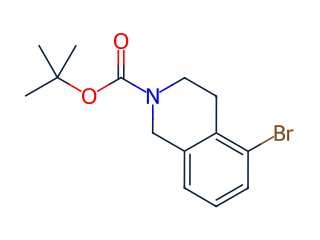
tert-Butyl 5-bromo-3,4-dihydroisoquinoline-2(1H)-carboxylate (CAS 215184-78-4) – saturated N-heterocycle, 97%. C14H18BrNO2, MW 312.2. COA included.
Listed under CAS 215184-78-4, tert-Butyl 5-bromo-3,4-dihydroisoquinoline-2(1H)-carboxylate is a saturated N-heterocycle available from Vaqora Chemicals at a purity of 97%. Its molecular formula is C14H18BrNO2 and its molecular weight is 312.2 g/mol. Its systematic (IUPAC) name is tert-butyl 5-bromo-3,4-dihydro-1H-isoquinoline-2-carboxylate. Common synonyms include 2-Boc-5-bromo-1,2,3,4-tetrahydroisoquinoline.
In its supplied form it is a solid or liquid. Keep containers tightly closed in a cool, well-ventilated area away from heat and ignition sources. The GHS classification uses the signal word “Warning”, so appropriate gloves, eye protection and ventilation are recommended.
Key uses span organic synthesis and API synthesis. It is used across pharmaceutical manufacturing and academic and industrial research.
Vaqora Chemicals supplies tert-Butyl 5-bromo-3,4-dihydroisoquinoline-2(1H)-carboxylate in 250 mg, 1 g and 5 g packs, each shipped with a Certificate of Analysis (COA), and exports worldwide.
| Product name | tert-Butyl 5-bromo-3,4-dihydroisoquinoline-2(1H)-carboxylate, 97% |
|---|---|
| Catalogue No. | VQ-012538 |
| CAS Number | 215184-78-4 |
| IUPAC name | tert-butyl 5-bromo-3,4-dihydro-1H-isoquinoline-2-carboxylate |
| Molecular formula | C14H18BrNO2 |
| Molecular weight | 312.2 g/mol |
| Exact mass | 311.0521 |
| Purity / assay | 97% |
| HSN code | 29333990 |
| InChIKey | YSAAGRAKROVFRY-UHFFFAOYSA-N |
| SMILES | CC(C)(C)OC(=O)N1CCC2=C(C1)C=CC=C2Br |
| PubChem CID | 18315369 |
| Physical form | Liquid |
|---|---|
| Appearance | Solid or liquid |
| LogP (XLogP3) | 3.3 |
| H-bond donors / acceptors | 0 / 2 |
| TPSA | 29.5 Ų |
| Synonyms | tert-Butyl 5-bromo-3,4-dihydroisoquinoline-2(1H)-carboxylate, tert-butyl 5-bromo-1,2,3,4-tetrahydroisoquinoline-2-carboxylate, 2-Boc-5-bromo-1,2,3,4-tetrahydroisoquinoline, tert-butyl 5-bromo-1,2,3,4-tetrahydroisoquinoline-, t-butyl 5-bromo-3,4-dihydroisoquinoline-2(1H)-carboxylate, N-tert-butoxycarbonyl-5-bromo-1,2,3,4-tetrahydroisoquinoline, tert-butyl 5-bromo-3,4-dihydroisoquinoline- 2(1H)-carboxylate, 1,1-dimethylethyl 5-bromo-3,4-dihydro-2(1H)-isoquinolinecarboxylate |

Signal word: Warning
H302Harmful if swallowedH315Causes skin irritationH319Causes serious eye irritationH332Harmful if inhaledH335May cause respiratory irritationClassification is indicative (aggregated GHS notifications) and may vary by grade and concentration. Always refer to the SDS supplied with your lot.
The CAS Registry Number of tert-Butyl 5-bromo-3,4-dihydroisoquinoline-2(1H)-carboxylate, 97% is 215184-78-4. It is also known as tert-Butyl 5-bromo-3,4-dihydroisoquinoline-2(1H)-carboxylate, tert-butyl 5-bromo-1,2,3,4-tetrahydroisoquinoline-2-carboxylate, 2-Boc-5-bromo-1,2,3,4-tetrahydroisoquinoline.
tert-Butyl 5-bromo-3,4-dihydroisoquinoline-2(1H)-carboxylate, 97% has the molecular formula C14H18BrNO2 and a molecular weight of 312.2 g/mol. Its IUPAC name is tert-butyl 5-bromo-3,4-dihydro-1H-isoquinoline-2-carboxylate.
We supply tert-Butyl 5-bromo-3,4-dihydroisoquinoline-2(1H)-carboxylate, 97% in (97%) grade, in 250 mg, 1 g, 5 g packs. Larger bulk quantities and custom packing are quoted on request.
Yes. Every lot of tert-Butyl 5-bromo-3,4-dihydroisoquinoline-2(1H)-carboxylate, 97% is shipped with a batch-specific Certificate of Analysis, and a 16-section GHS Safety Data Sheet is provided with the quotation and the shipment.
Yes. tert-Butyl 5-bromo-3,4-dihydroisoquinoline-2(1H)-carboxylate, 97% is classified as hazardous, so it is packed in UN-approved packaging and shipped as dangerous goods under IATA/IMDG rules. We export worldwide on EXW, FOB, CIF and DAP terms.
We reply within one business day with price, pack options, lead time and documentation.