 Australia
 Bangladesh
 Belgium
 Brazil
 Canada
 China
 Egypt
 France
 Germany
 India
 Indonesia
 Ireland
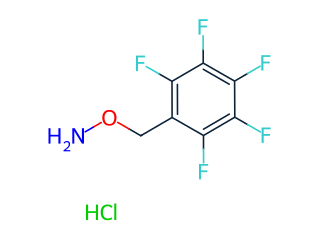
O-(2,3,4,5,6-Pentafluorobenzyl)hydroxylaminehydrochloride
- CAS
- 57981-02-9
- Formula
- C7H5ClF5NO
- MW
- 249.56 g/mol
VQ-033989
 VAQORA
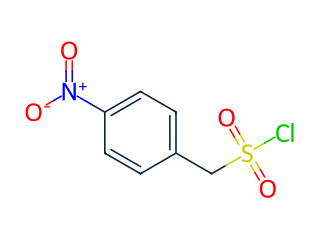
Synonyms: (4-nitrophenyl)methanesulfonylchloride · 4-Nitrobenzylsulfonyl chloride · 4-nitrobenzyl sulfonyl chloride · 4-nitrobenzyl sulphonyl chloride
4-Nitro-α-toluenesulfonyl chloride (CAS 4025-75-6) – Sumatriptan impurity standard. C7H6ClNO4S, MW 235.65. Vaqora Chemicals: COA, global shipping.
Listed under CAS 4025-75-6, 4-Nitro-α-toluenesulfonyl chloride is an impurity of Sumatriptan available from Vaqora Chemicals. Formula C7H6ClNO4S, molecular weight 235.65 g/mol. The IUPAC name is (4-nitrophenyl)methanesulfonyl chloride. It is also known as (4-nitrophenyl)methanesulfonylchloride or 4-Nitrobenzylsulfonyl chloride.
The product is provided as a solid. Reference materials should be stored sealed and away from light and moisture, as specified on the accompanying COA. Under GHS it is labelled “Danger”, so handle it with suitable PPE and consult the SDS.
Pharmaceutical QC and development laboratories use this impurity standard of Sumatriptan to develop and validate HPLC methods, to set specification limits and to document impurity profiles in ANDA and DMF submissions. It is used across pharmaceutical manufacturing and academic and industrial research.
Standard pack sizes are 10 mg, 25 mg, 50 mg and 100 mg, and every batch ships with a Certificate of Analysis (COA) and we export worldwide.
View every impurity, metabolite and intermediate we list for Sumatriptan.
Sumatriptan impurities| Product name | 4-Nitro-α-toluenesulfonyl chloride |
|---|---|
| Catalogue No. | VQ-033990 |
| CAS Number | 4025-75-6 |
| IUPAC name | (4-nitrophenyl)methanesulfonyl chloride |
| Molecular formula | C7H6ClNO4S |
| Molecular weight | 235.65 g/mol |
| Exact mass | 234.9706 |
| Grade | Reference Standard |
| HSN code | 38229090 |
| InChIKey | CAXRPEAFHWDFTD-UHFFFAOYSA-N |
| SMILES | C1=CC(=CC=C1CS(=O)(=O)Cl)[N+](=O)[O-] |
| PubChem CID | 2794642 |
| Physical form | Solid |
|---|---|
| LogP (XLogP3) | 2.1 |
| H-bond donors / acceptors | 0 / 4 |
| TPSA | 88.3 Ų |
| Synonyms | (4-nitrophenyl)methanesulfonylchloride, 4-Nitrobenzylsulfonyl chloride, 4-nitrobenzyl sulfonyl chloride, 4-nitrobenzyl sulphonyl chloride, 4-nitrophenylmethanesulfonylchloride, 4-Nitro-, A-toluenesulfonyl chloride, 4-nitrophenylmethanesulfonyl chloride, chloro[(4-nitrophenyl)methyl]sulfone, 4-nitrophenylmethanesulphonyl chloride, (4-nitrophenyl)methanesulfonyl chloride, AldrichCPR |


Signal word: Danger
H261In contact with water releases flammable gasH314Causes severe skin burns and eye damageH317May cause an allergic skin reactionH318Causes serious eye damagePrecautionary statements: P203, P231 + P232, P260, P261, P264, P264 + P265, P272, P280, P301 + P330 + P331, P302 + P352, P302 + P361 + P354, P304 + P340, P305 + P354 + P338, P316, P317, P318, P321, P333 + P317, P362 + P364, P363, P370 + P378, P402 + P404, P405, P501
Classification is indicative (aggregated GHS notifications) and may vary by grade and concentration. Always refer to the SDS supplied with your lot.
The CAS Registry Number of 4-Nitro-α-toluenesulfonyl chloride is 4025-75-6. It is also known as (4-nitrophenyl)methanesulfonylchloride, 4-Nitrobenzylsulfonyl chloride, 4-nitrobenzyl sulfonyl chloride.
4-Nitro-α-toluenesulfonyl chloride has the molecular formula C7H6ClNO4S and a molecular weight of 235.65 g/mol. Its IUPAC name is (4-nitrophenyl)methanesulfonyl chloride.
4-Nitro-α-toluenesulfonyl chloride is supplied as a characterised reference material related to Sumatriptan. It is used for analytical method development and validation (AMV), impurity profiling, stability studies and quality control, and in ANDA/DMF regulatory filings.
We supply 4-Nitro-α-toluenesulfonyl chloride in Reference Standard grade, in 10 mg, 25 mg, 50 mg, 100 mg packs. Larger bulk quantities and custom packing are quoted on request.
Yes. Every lot of 4-Nitro-α-toluenesulfonyl chloride is shipped with a batch-specific Certificate of Analysis, and a 16-section GHS Safety Data Sheet is provided with the quotation and the shipment.
Yes. 4-Nitro-α-toluenesulfonyl chloride is classified as hazardous, so it is packed in UN-approved packaging and shipped as dangerous goods under IATA/IMDG rules. We export worldwide on EXW, FOB, CIF and DAP terms.
We reply within one business day with price, pack options, lead time and documentation.