 Australia
 Bangladesh
 Belgium
 Brazil
 Canada
 China
 Egypt
 France
 Germany
 India
 Indonesia
 Ireland
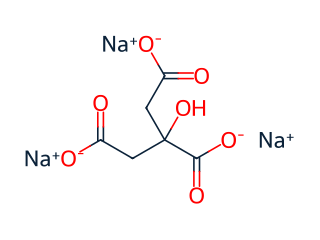
Sodium Citrate Anhydrous Meets, USP, cell culture tested
- CAS
- 68-04-2
- Formula
- C6H5Na3O7
- MW
- 258.07 g/mol
VQ-020215
 VAQORA
Synonyms: Sphingomyelin (egg)
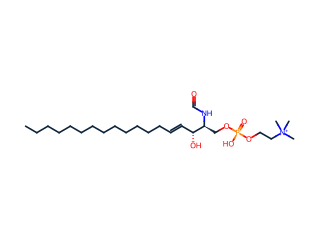
Sphingomyelin, cell culture tested (CAS 85187-10-6) – cell culture reagent, Cell Culture grade. C24H50N2O6P+, MW 493.6. With COA, ships worldwide.
Listed under CAS 85187-10-6, Sphingomyelin, cell culture tested is a cell culture reagent available from Vaqora Chemicals (Cell Culture grade). With the molecular formula C24H50N2O6P+, it has a molar mass of 493.6 g/mol. Its systematic (IUPAC) name is 2-[[(E,2S,3R)-2-formamido-3-hydroxyoctadec-4-enoxy]-hydroxyphosphoryl]oxyethyl-trimethylazanium. It is also known as Sphingomyelin (egg).
Store in a tightly closed container in a cool, dry and well-ventilated place. Good laboratory practice and suitable PPE are recommended during handling.
Typical applications include cell culture, media supplementation and cell-based assays. Typical end-use sectors are academic and industrial research and diagnostics and biotechnology.
Vaqora Chemicals supplies Sphingomyelin, cell culture tested in 100 mg and 500 mg packs, each shipped with a Certificate of Analysis (COA), and exports worldwide. SDS and detailed specification sheets can be requested with your quotation.
| Product name | Sphingomyelin, cell culture tested |
|---|---|
| Catalogue No. | VQ-020216 |
| CAS Number | 85187-10-6 |
| IUPAC name | 2-[[(E,2S,3R)-2-formamido-3-hydroxyoctadec-4-enoxy]-hydroxyphosphoryl]oxyethyl-trimethylazanium |
| Molecular formula | C24H50N2O6P+ |
| Molecular weight | 493.6 g/mol |
| Exact mass | 493.3406 |
| Grade | Cell Culture |
| InChIKey | LRYZPFWEZHSTHD-HEFFAWAOSA-O |
| SMILES | CCCCCCCCCCCCC/C=C/[C@H]([C@H](COP(=O)(O)OCC[N+](C)(C)C)NC=O)O |
| PubChem CID | 44176376 |
| Physical form | Other |
|---|---|
| LogP (XLogP3) | 5 |
| H-bond donors / acceptors | 3 / 6 |
| TPSA | 105 Ų |
The CAS Registry Number of Sphingomyelin, cell culture tested is 85187-10-6. It is also known as Sphingomyelin (egg).
Sphingomyelin, cell culture tested has the molecular formula C24H50N2O6P+ and a molecular weight of 493.6 g/mol. Its IUPAC name is 2-[[(E,2S,3R)-2-formamido-3-hydroxyoctadec-4-enoxy]-hydroxyphosphoryl]oxyethyl-trimethylazanium.
We supply Sphingomyelin, cell culture tested in Cell Culture grade, in 100 mg, 500 mg packs. Larger bulk quantities and custom packing are quoted on request.
Yes. Every lot of Sphingomyelin, cell culture tested is shipped with a batch-specific Certificate of Analysis, and a 16-section GHS Safety Data Sheet is provided with the quotation and the shipment.
Yes. We export Sphingomyelin, cell culture tested worldwide by air and sea freight or express courier, on EXW, FOB, CIF, CFR or DAP Incoterms, with full export documentation.
We reply within one business day with price, pack options, lead time and documentation.