 Australia
 Bangladesh
 Belgium
 Brazil
 Canada
 China
 Egypt
 France
 Germany
 India
 Indonesia
 Ireland
 VAQORA
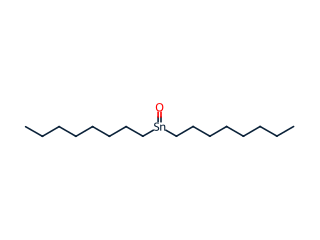
Dioctyltin oxide, 97%
Synonyms: Dioctyloxostannane · Stannane, dioctyloxo- · Tin, dioctyloxo- · Stannane, oxodioctyl-
CAS No.870-08-6
FormulaC16H34OSn
Mol. weight361.20
Catalogue No.VQ-001172
Purity97%
HSN29319000
Dioctyltin oxide (CAS 870-08-6) – organometallic reagent, Synthesis grade, 97%. C16H34OSn, MW 361.2. Order from Vaqora Chemicals with COA and global delivery.
Batch COA with every lot
16-section GHS SDS
Export to 120+ countries
DG-compliant packing
About Dioctyltin oxide, 97%
Dioctyltin oxide (CAS 870-08-6) is an organometallic reagent offered by Vaqora Chemicals (Synthesis grade) at a purity of 97%. The compound has the formula C16H34OSn, corresponding to a molecular weight of 361.2 g/mol. Its systematic (IUPAC) name is dioctyl(oxo)tin. Alternative names: Dioctyloxostannane and Stannane, dioctyloxo-.
The material typically appears as a white to off-white powder. Keep the container tightly sealed and store it in a cool, dry area. The GHS classification uses the signal word “Danger”, so appropriate gloves, eye protection and ventilation are recommended.
It is commonly used for carbon–carbon bond formation, grignard and organometallic chemistry and organic synthesis. Buyers come mainly from academic and industrial research.
Standard pack sizes are 25 g, 100 g and 1 kg, and every batch ships with a Certificate of Analysis (COA) and we export worldwide.
Typical applications
- Carbon–carbon bond formation
- Grignard & organometallic chemistry
- Organic synthesis
Industries
Specifications & identifiers
| Product name | Dioctyltin oxide, 97% |
|---|---|
| Catalogue No. | VQ-001172 |
| CAS Number | 870-08-6 |
| IUPAC name | dioctyl(oxo)tin |
| Molecular formula | C16H34OSn |
| Molecular weight | 361.2 g/mol |
| Exact mass | 362.1632 |
| Grade | Synthesis |
| Purity / assay | 97% |
| HSN code | 29319000 |
| InChIKey | LQRUPWUPINJLMU-UHFFFAOYSA-N |
| SMILES | CCCCCCCC[Sn](=O)CCCCCCCC |
| PubChem CID | 93563 |
| Physical form | Powder |
|---|---|
| Appearance | White to off-white powder |
| H-bond donors / acceptors | 0 / 1 |
| TPSA | 17.1 Ų |
| Synonyms | Dioctyloxostannane, Stannane, dioctyloxo-, Tin, dioctyloxo-, Stannane, oxodioctyl-, Di-n-octyl-zinn oxyd, Tin, dioctyl-, oxide, Di-n-octyltin oxide, dioctylstannanone, Dioctyloxotin >90%, dioctyl(oxo)stannane, Dioctyltinoxide, di-n-octyl tin oxide |
Safety & hazard information (GHS)

Signal word: Danger
Hazard statements
H361Suspected of damaging fertility or the unborn childH371May cause damage to organsH372Causes damage to organs through prolonged or repeated exposureH373May causes damage to organs through prolonged or repeated exposureH413May cause long lasting harmful effects to aquatic life
Precautionary statements: P203, P260, P264, P270, P273, P280, P308 + P316, P318, P319, P405, P501
Classification is indicative (aggregated GHS notifications) and may vary by grade and concentration. Always refer to the SDS supplied with your lot.
Documents
Frequently asked questions
What is the CAS number of Dioctyltin oxide, 97%?
The CAS Registry Number of Dioctyltin oxide, 97% is 870-08-6. It is also known as Dioctyloxostannane, Stannane, dioctyloxo-, Tin, dioctyloxo-.
What is the molecular formula and molecular weight of Dioctyltin oxide, 97%?
Dioctyltin oxide, 97% has the molecular formula C16H34OSn and a molecular weight of 361.2 g/mol. Its IUPAC name is dioctyl(oxo)tin.
Which grade and pack sizes of Dioctyltin oxide, 97% can I order?
We supply Dioctyltin oxide, 97% in Synthesis (97%) grade, in 25 g, 100 g, 1 kg packs. Larger bulk quantities and custom packing are quoted on request.
Do you provide a COA and SDS with Dioctyltin oxide, 97%?
Yes. Every lot of Dioctyltin oxide, 97% is shipped with a batch-specific Certificate of Analysis, and a 16-section GHS Safety Data Sheet is provided with the quotation and the shipment.
Can Dioctyltin oxide, 97% be shipped internationally?
Yes. Dioctyltin oxide, 97% is classified as hazardous, so it is packed in UN-approved packaging and shipped as dangerous goods under IATA/IMDG rules. We export worldwide on EXW, FOB, CIF and DAP terms.
Enquire about Dioctyltin oxide, 97%
We reply within one business day with price, pack options, lead time and documentation.
Related products
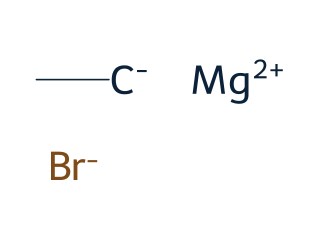
Ethylmagnesium bromide solution 3.0 M in diethyl ether
- CAS
- 925-90-6
- Formula
- C2H5BrMg
- MW
- 133.27 g/mol
VQ-001175