 Australia
 Bangladesh
 Belgium
 Brazil
 Canada
 China
 Egypt
 France
 Germany
 India
 Indonesia
 Ireland
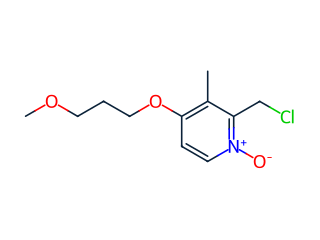
2-(Chloromethyl)-4-(3-methoxypropoxy)-3-methylpyridine 1-oxide
- CAS
- 924663-39-8
- Formula
- C11H16ClNO3
- MW
- 245.7 g/mol
VQ-041808
 VAQORA
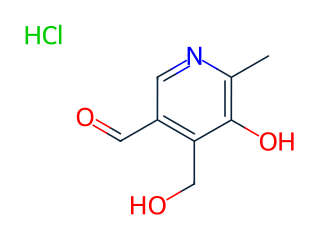
Synonyms: 5-Hydroxy-4-(hydroxymethyl)-6-methylnicotinaldehyde hydrochloride · 5-Hydroxy-4-(hydroxymethyl)-6-methyl-3-Pyridinecarboxaldehyde Hydrochloride · 5-Hydroxy-4-(hydroxymethyl)-6-methylnicotinaldehydehydrochloride
Isopyridoxal hydrochloride (CAS 90005-85-9) – pyridine derivative. C8H10ClNO3, MW 203.62. Order from Vaqora Chemicals with COA and global delivery.
Isopyridoxal hydrochloride (CAS 90005-85-9) is a pyridine derivative offered by Vaqora Chemicals. With the molecular formula C8H10ClNO3, it has a molar mass of 203.62 g/mol.
Store in a tightly closed container in a cool, dry and well-ventilated place. Good laboratory practice and suitable PPE are recommended during handling.
Key uses span organic synthesis and API synthesis. Our customers for this product work in pharmaceutical manufacturing and academic and industrial research.
Vaqora Chemicals supplies Isopyridoxal hydrochloride in 100 mg, 250 mg, 1 g and 5 g packs, each shipped with a Certificate of Analysis (COA), and exports worldwide. SDS and detailed specification sheets can be requested with your quotation. Custom pack sizes, bulk quantities and specific analytical data can be arranged on request. Export shipments are packed to international standards with the required transport documentation.
| Product name | Isopyridoxal hydrochloride |
|---|---|
| Catalogue No. | VQ-041765 |
| CAS Number | 90005-85-9 |
| IUPAC name | 5-hydroxy-4-(hydroxymethyl)-6-methylpyridine-3-carbaldehyde;hydrochloride |
| Molecular formula | C8H10ClNO3 |
| Molecular weight | 203.62 g/mol |
| Exact mass | 203.0349 |
| HSN code | 2933 |
| InChIKey | IJRYEEAKAHJPTM-UHFFFAOYSA-N |
| SMILES | CC1=NC=C(C(=C1O)CO)C=O.Cl |
| PubChem CID | 117065476 |
| Physical form | Other |
|---|---|
| H-bond donors / acceptors | 3 / 4 |
| TPSA | 70.4 Ų |
The CAS Registry Number of Isopyridoxal hydrochloride is 90005-85-9. It is also known as 5-Hydroxy-4-(hydroxymethyl)-6-methylnicotinaldehyde hydrochloride, 5-Hydroxy-4-(hydroxymethyl)-6-methyl-3-Pyridinecarboxaldehyde Hydrochloride, 5-Hydroxy-4-(hydroxymethyl)-6-methylnicotinaldehydehydrochloride.
Isopyridoxal hydrochloride has the molecular formula C8H10ClNO3 and a molecular weight of 203.62 g/mol.
We supply Isopyridoxal hydrochloride, in 100 mg, 250 mg, 1 g, 5 g packs. Larger bulk quantities and custom packing are quoted on request.
Yes. Every lot of Isopyridoxal hydrochloride is shipped with a batch-specific Certificate of Analysis, and a 16-section GHS Safety Data Sheet is provided with the quotation and the shipment.
Yes. We export Isopyridoxal hydrochloride worldwide by air and sea freight or express courier, on EXW, FOB, CIF, CFR or DAP Incoterms, with full export documentation.
We reply within one business day with price, pack options, lead time and documentation.