
Grade guide
AR Grade (Analytical Reagent) chemicals
Analytical Reagent grade: high-purity chemicals with specified maximum limits for individual impurities, suitable for quantitative analysis.
What AR grade means
AR, or Analytical Reagent, grade denotes chemicals of high purity whose specification lists maximum limits for named impurities, such as chloride, sulfate, heavy metals, iron and insoluble matter, as well as a minimum assay. The grade exists so that the reagent itself does not contribute measurable error to an analysis. The terms GR (Guaranteed Reagent) and pro analysi (p.a.) are used by some manufacturers for broadly equivalent grades.
AR is a trade grade rather than a single legal standard. Different manufacturers set their own AR specifications, often modelled on ACS Reagent Chemicals or ISO reagent standards, so it is worth comparing specific limits when switching supplier.
Typical specifications
| Parameter | Example: sodium chloride AR |
|---|---|
| Assay | ≥ 99.5 to 99.9% |
| Insoluble matter | ≤ 0.005% |
| Sulfate (SO₄) | ≤ 0.001 to 0.004% |
| Heavy metals (as Pb) | ≤ 5 ppm |
| Iron (Fe) | ≤ 2 ppm |
| pH of 5% solution | Within a stated range |
Values in the table are typical of the grade. The limits that apply to a given product are those stated on its specification and lot Certificate of Analysis.
Where it is used
- Preparation of volumetric solutions and standards for titrimetry
- Gravimetric and instrumental quantitative analysis
- Quality control testing in pharmaceutical, food, water and metallurgical laboratories
- Research where impurities could interfere with results
How it differs from neighbouring grades
LR grade has a lower assay and fewer or wider impurity limits, which makes it economical for synthesis, cleaning and teaching but unsuitable for quantitative work. ACS grade is a specific, published standard: a product labelled ACS must meet the current ACS Reagent Chemicals monograph, whereas AR limits are set by each manufacturer. HPLC and other application grades add tests specific to an instrument technique, such as UV absorbance or residue, that AR does not include. For primary standards in titrimetry, a certified or primary-standard grade may be required in addition.
Choosing AR grade
Use AR when the reagent's impurities could reach your result, and check that the limits on the COA cover the impurities that matter for your method.
Ordering AR grade reagents
When you request a quotation for an AR product, we state the assay and impurity limits that the offered lot meets. If your method depends on a particular impurity, such as iron in a colorimetric test or chloride in a conductivity measurement, mention it and we will confirm the relevant limit before you order.
1,434 AR Grade (Analytical Reagent) products
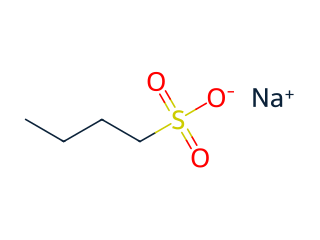
1-Butane sulfonic acid sodium salt anhydrous, AR, for HPLC ≥99%
- CAS
- 2386-54-1
- Formula
- C4H9NaO3S
- MW
- 160.17 g/mol
VQ-045528
1-Butane Sulphonic Acid Sodium Salt Anhydrous, AR 99%
- CAS
- 2386-54-1
- Formula
- C4H9NaO3S
- MW
- 160.17 g/mol
VQ-046224
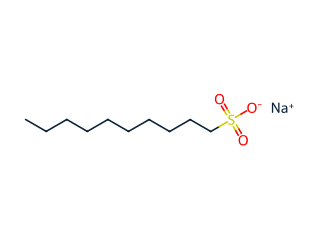
1-Decanesulphonic acid sodium salt, AR, for HPLC ≥99%
- CAS
- 13419-61-9
- Formula
- C10H21NaO3S
- MW
- 244.33 g/mol
VQ-045529
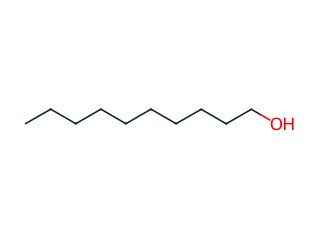
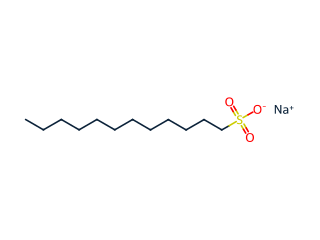
1-Dodecane sulphonic acid sodium salt, AR, for HPLC
- CAS
- 2386-53-0
- Formula
- C12H25NaO3S
- MW
- 272.38 g/mol
VQ-045577
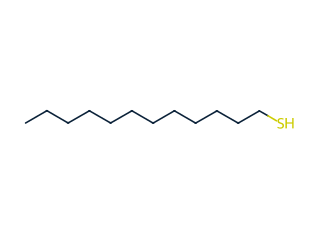
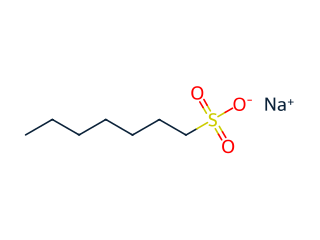
1-Heptane sulphonic acid sodium salt anhydrous, AR, for HPLC ≥99%
- CAS
- 22767-50-6
- Formula
- C7H15NaO3S
- MW
- 202.25 g/mol
VQ-045487
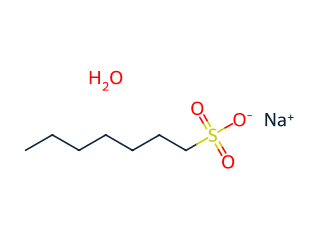
1-Heptane sulphonic acid sodium salt, monohydrate, AR, for HPLC ≥99%
- CAS
- 207300-90-1
- Formula
- C7H17NaO4S
- MW
- 220.26 g/mol
VQ-045522
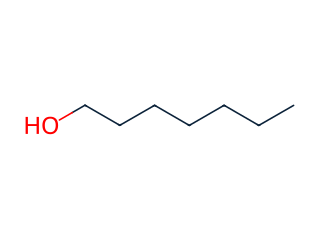
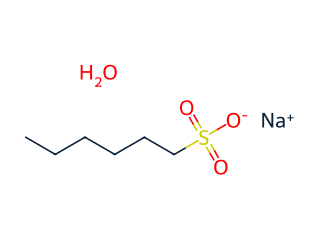
1-Hexane sulphonic acid sodium salt (monohydrate), AR, for HPLC ≥99%
- CAS
- 207300-91-2
- Formula
- C6H15NaO4S
- MW
- 206.24 g/mol
VQ-019571
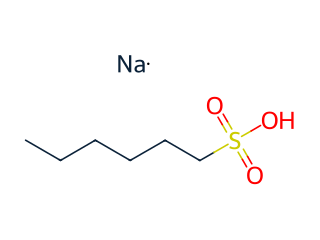
1-Hexane sulphonic acid sodium salt anhydrous, AR, for HPLC ≥99%
- CAS
- 2832-45-3
- Formula
- C6H14NaO3S
- MW
- 189.23 g/mol
VQ-045499
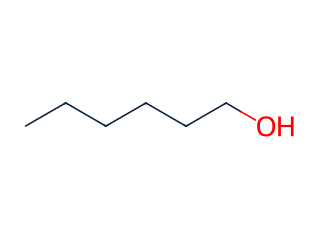
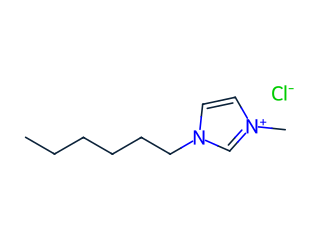
1-Hexyl-3-methyl imidazolium chloride, AR 98.5%
- CAS
- 171058-17-6
- Formula
- C10H19ClN2
- MW
- 202.72 g/mol
VQ-046270
FAQs
Is AR grade the same as GR grade?
Broadly, yes. Both describe high-purity analytical reagents with defined impurity limits, but specifications are set by each manufacturer, so compare the actual limits.
Is AR grade the same as ACS grade?
Not necessarily. ACS grade must meet the published ACS Reagent Chemicals specification. Many AR products meet or approach it, but only products tested to ACS can be labelled ACS.
Can AR grade be used in pharmaceutical manufacture?
AR grade is intended for analysis. Materials used in medicines should be of pharmacopoeial grade with appropriate regulatory documentation.
Other grades
HPLC GradeGC GradeACS GradeLR Grade (Laboratory Reagent)Extra Pure GradeMolecular Biology GradeSpectroscopy GradeLC-MS GradeIP Grade (Indian Pharmacopoeia)BP Grade (British Pharmacopoeia)USP Grade (United States Pharmacopeia)Ph. Eur. Grade (European Pharmacopoeia)Food Grade (FCC)Technical GradeElectronic GradeDeuterated & Stable-Isotope-Labelled CompoundsPharmaceutical Secondary Reference Standards
Need a price, a spec or a custom compound?
Send us your list — product names or CAS numbers, grade, quantity and destination. Our team replies with a formal quotation, COA and lead time.