
Grade guide
Spectroscopy Grade chemicals
Solvents with guaranteed optical transmittance in the UV, visible and IR regions, and low fluorescence, for spectrophotometric measurement.
What spectroscopy grade means
Spectroscopy grade solvents and reagents are purified and tested so that they contribute as little absorbance or emission as possible in the region where you are measuring. The key specification is transmittance, or absorbance, at defined wavelengths against a reference, rather than chemical assay alone. Grades exist for UV-visible, infrared and fluorescence spectroscopy, and for materials such as potassium bromide used in IR sample preparation.
Typical specifications
| Parameter | Example: ethanol for UV spectroscopy |
|---|---|
| Assay (GC) | ≥ 99.8% |
| Transmittance at 210 nm | ≥ 50% (1 cm path vs water) |
| Transmittance at 220 nm | ≥ 75% |
| Transmittance at 240 nm and above | ≥ 95 to 98% |
| Fluorescence (fluorescence grade) | Below a stated equivalent of quinine sulfate |
| Water | ≤ 0.1 to 0.2% |
Values in the table are typical of the grade. The limits that apply to a given product are those stated on its specification and lot Certificate of Analysis.
UV cutoff
Every solvent has a UV cutoff, the wavelength below which it absorbs too strongly to be useful, conventionally where absorbance reaches 1 AU in a 1 cm cell. Approximate values are 190 nm for acetonitrile and water, 195 to 205 nm for hexane and methanol, 210 nm for ethanol, 245 nm for chloroform and 330 nm for acetone. Spectroscopy grade lowers the working limit towards the solvent's intrinsic cutoff by removing absorbing impurities.
Where it is used
- UV-visible assays and identity tests in pharmaceutical and research laboratories
- Fluorescence spectroscopy, where trace fluorescent impurities cause large backgrounds
- IR spectroscopy, including KBr for pellets and solvents for solution cells
- Determination of molar absorptivity and spectral libraries
How it differs from neighbouring grades
HPLC grade also specifies UV absorbance but adds chromatographic tests such as residue, filtration and gradient blanks, and is frequently interchangeable for UV work. AR grade ensures chemical purity but may retain trace aromatics or carbonyl compounds that absorb in the low UV. For quantitative UV below about 250 nm, a spectroscopy or HPLC grade is strongly advised.
Ordering spectroscopy grade
Tell us the wavelength range and technique you use. We will confirm which transmittance or fluorescence values the offered lot has been tested for, since specifications for the same solvent can differ between UV, fluorescence and IR variants, and choosing the right one avoids paying for tests you do not need.
155 Spectroscopy Grade products
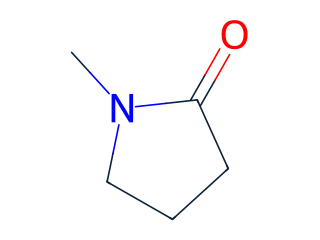
1-Methyl 2-pyrrollidone, for HPLC, for spectroscopy ≥99.50%
- CAS
- 872-50-4
- Formula
- C5H9NO
- MW
- 99.13 g/mol
VQ-045751
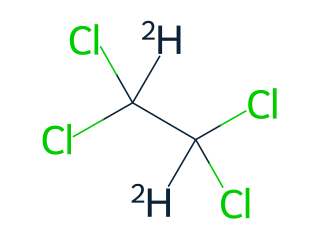
1,1,2,2-Tetrachloroethane-d2 (TCE-d2), for spectroscopy, for NMR
- CAS
- 33685-54-0
- Formula
- C2H2Cl4
- MW
- 169.9 g/mol
VQ-020267
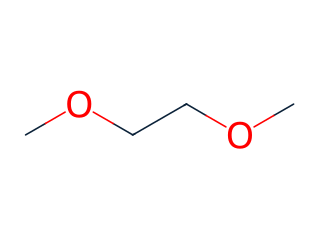
1,2-Dimethoxyethane, for HPLC, for spectroscopy ≥99.50%
- CAS
- 110-71-4
- Formula
- C4H10O2
- MW
- 90.12 g/mol
VQ-047055
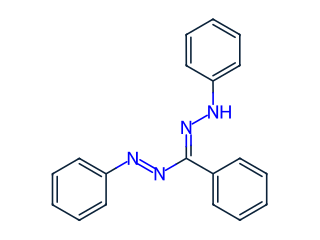
1,3,5-Triphenyltetrazolium formazan, for spectroscopy ≥90.00%
- CAS
- 531-52-2
- Formula
- C19H16N4
- MW
- 300.4 g/mol
VQ-020495
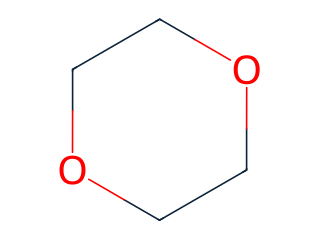
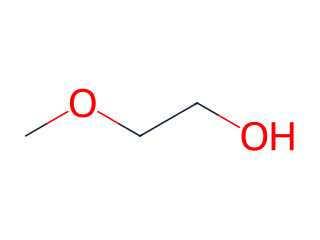
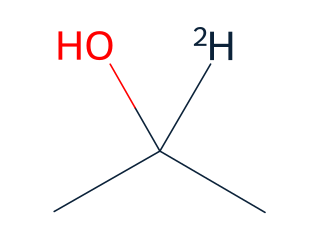
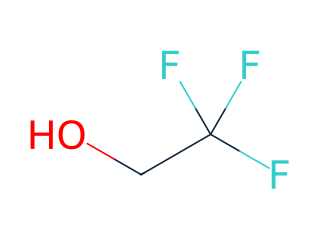
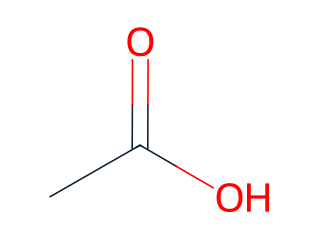
Acetic acid glacial, for HPLC, for spectroscopy ≥99.80%
- CAS
- 64-19-7
- Formula
- C2H4O2
- MW
- 60.05 g/mol
VQ-045579
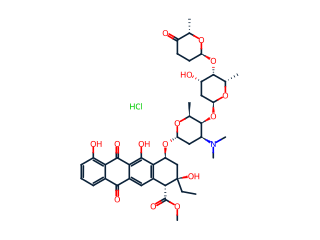
Aclarubicin Hydrochloride, for spectroscopy ≥90.00%
- CAS
- 75443-99-1
- Formula
- C42H54ClNO15
- MW
- 848.3 g/mol
VQ-020421
FAQs
Can I use HPLC grade solvent for UV spectroscopy?
Usually, yes. HPLC grade solvents have specified UV absorbance and are often suitable, provided the wavelengths you use are covered by the specification.
What is a solvent's UV cutoff?
The wavelength below which the solvent's own absorbance, in a 1 cm cell, exceeds about 1 AU, making measurements unreliable.
Why is fluorescence grade needed?
Fluorescence is far more sensitive than absorbance, so trace fluorescent impurities that are invisible in UV can dominate an emission spectrum.
Other grades
HPLC GradeGC GradeAR Grade (Analytical Reagent)ACS GradeLR Grade (Laboratory Reagent)Extra Pure GradeMolecular Biology GradeLC-MS GradeIP Grade (Indian Pharmacopoeia)BP Grade (British Pharmacopoeia)USP Grade (United States Pharmacopeia)Ph. Eur. Grade (European Pharmacopoeia)Food Grade (FCC)Technical GradeElectronic GradeDeuterated & Stable-Isotope-Labelled CompoundsPharmaceutical Secondary Reference Standards
Need a price, a spec or a custom compound?
Send us your list — product names or CAS numbers, grade, quantity and destination. Our team replies with a formal quotation, COA and lead time.