
Grade guide
USP Grade (United States Pharmacopeia) chemicals
Material that complies with its USP–NF monograph, the official US compendial standard for drug substances, excipients and dietary ingredients.
What USP grade means
USP grade means a substance complies with its monograph in the United States Pharmacopeia–National Formulary (USP–NF), published by the United States Pharmacopeial Convention. Drug substance monographs appear in the USP, while most excipient monographs appear in the NF, which is why excipients are often labelled NF. Under US law, a drug or ingredient with a USP–NF monograph is expected to comply with it, and the US Food and Drug Administration enforces compendial standards. The USP–NF is updated continuously through official publications, so the COA should reference the current official text.
What a USP monograph specifies
- Definition and assay limits
- Identification tests, often using USP Reference Standards
- Impurity tests: organic impurities, residual solvents (General Chapter <467>), elemental impurities (<232> and <233>)
- Specific tests such as water, residue on ignition, pH or particle size
- Packaging, storage and labelling requirements
Typical specification profile
| Parameter | Example: sodium bicarbonate USP |
|---|---|
| Assay | 99.0 to 100.5% (dried basis) |
| Loss on drying | ≤ 0.25% |
| Insoluble substances, carbonate, chloride, sulfate | Within monograph limits |
| Elemental impurities | Controlled in line with USP <232> and ICH Q3D |
Values in the table are typical of the grade. The limits that apply to a given product are those stated on its specification and lot Certificate of Analysis.
Where it is used
USP-grade materials are used in medicines for the US market, in development laboratories performing USP methods, and increasingly as a quality benchmark in other markets. Dietary supplement ingredients may also have USP monographs.
How it differs from neighbouring grades
Ph. Eur., BP and IP grades are tested to different pharmacopoeias. Harmonised general chapters reduce but do not remove differences. FCC grade, also published by USP, covers food ingredients rather than drugs. ACS and AR are reagent grades without drug-compendial standing. Note that USP grade describes the material, while USP Reference Standards are separate, officially issued materials used to perform compendial tests.
Documentation
For USP-grade supplies, we provide a lot COA referencing the monograph and can request manufacturer statements on residual solvents, elemental impurities and nitrosamine risk where available.
755 USP Grade (United States Pharmacopeia) products

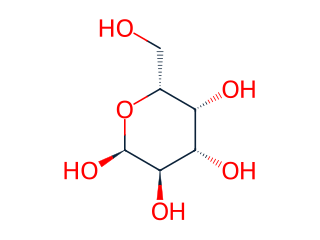
a-(D)-Galactose Anhydrous Meets, USP, cell culture tested
- CAS
- 3646-73-9
- Formula
- C6H12O6
- MW
- 180.16 g/mol
VQ-020214
FAQs
What is the difference between USP and NF?
Both are in the combined USP–NF. Drug substance monographs are generally in the USP. Excipient monographs are generally in the NF.
Is USP grade the same as a USP Reference Standard?
No. USP grade material complies with a monograph. USP Reference Standards are official materials issued by USP for use in compendial tests.
Does USP grade guarantee FDA acceptance?
No. Monograph compliance is expected, but FDA acceptance also depends on manufacturer GMP status, regulatory filings and the buyer's supplier qualification.
Other grades
HPLC GradeGC GradeAR Grade (Analytical Reagent)ACS GradeLR Grade (Laboratory Reagent)Extra Pure GradeMolecular Biology GradeSpectroscopy GradeLC-MS GradeIP Grade (Indian Pharmacopoeia)BP Grade (British Pharmacopoeia)Ph. Eur. Grade (European Pharmacopoeia)Food Grade (FCC)Technical GradeElectronic GradeDeuterated & Stable-Isotope-Labelled CompoundsPharmaceutical Secondary Reference Standards
Need a price, a spec or a custom compound?
Send us your list — product names or CAS numbers, grade, quantity and destination. Our team replies with a formal quotation, COA and lead time.