
Grade guide
Deuterated & Stable-Isotope-Labelled Compounds chemicals
Compounds enriched with deuterium, ¹³C or ¹⁵N for use as internal standards in mass spectrometry, NMR solvents and mechanistic or metabolic studies.
What stable-isotope-labelled compounds are
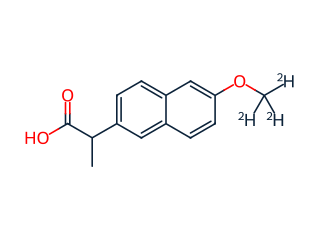
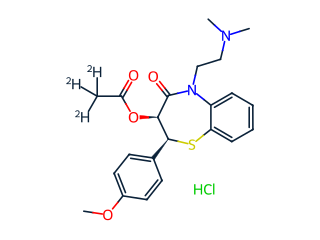
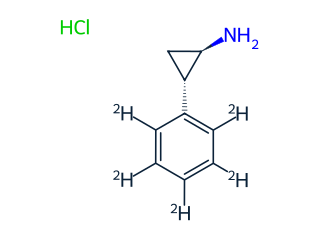
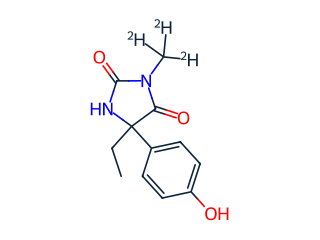
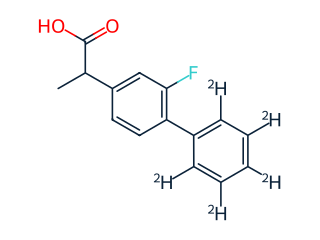
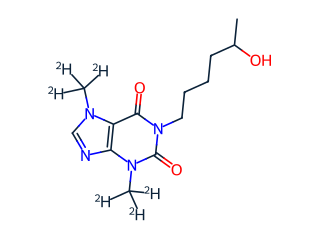
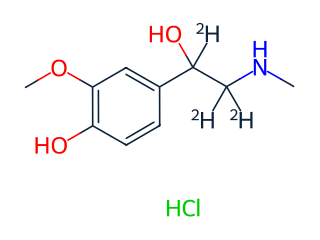
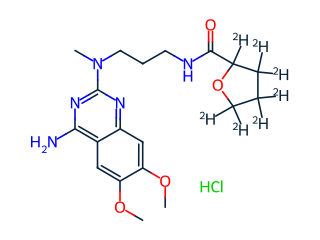
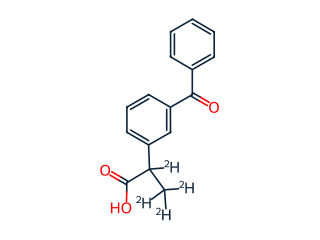
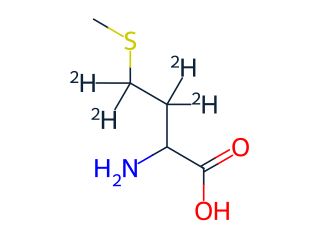
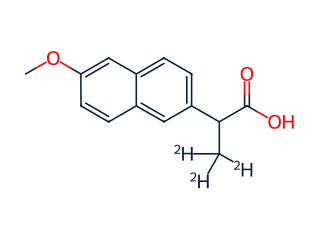
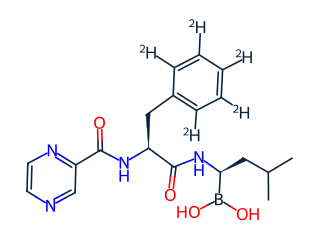
Stable-isotope-labelled (SIL) compounds have one or more atoms replaced by a heavier, non-radioactive isotope: deuterium (²H or D) in place of hydrogen, carbon-13 in place of carbon-12, or nitrogen-15 in place of nitrogen-14. The labelled molecule behaves almost identically in chemistry and chromatography but has a different mass, which a mass spectrometer can distinguish. Deuterated solvents such as chloroform-d and DMSO-d₆ are also widely used in NMR spectroscopy.
Key specifications
| Parameter | What it tells you | Typical value |
|---|---|---|
| Chemical purity (HPLC) | Proportion of the intended compound, regardless of labelling | ≥ 95 to 98% |
| Isotopic enrichment | Atom % of the heavy isotope at labelled positions | ≥ 98 to 99 atom % D or ¹³C |
| Unlabelled (d₀ or M+0) content | Residual unlabelled analyte that could bias results | Typically ≤ 0.1 to 0.5% |
| Identity | ¹H NMR and MS confirm structure and label position | Conforms |
Values in the table are typical. The limits for a given compound are those on its specification and lot Certificate of Analysis.
Where they are used
- Internal standards in quantitative LC-MS/MS bioanalysis, therapeutic drug monitoring and residue analysis
- Nitrosamine testing, where labelled nitrosamines correct for matrix effects
- NMR solvents and reference compounds
- Metabolism, pharmacokinetic and reaction-mechanism studies
Choosing a labelled standard
A mass difference of at least 3 Da from the analyte is generally recommended so that the natural isotope pattern of the analyte does not overlap the standard. Deuterium labels should sit on positions that do not exchange with solvent. Labels on OH, NH or acidic CH positions can be lost. Heavily deuterated compounds may elute slightly earlier than the analyte in reversed-phase LC, which can reduce how well they correct for matrix effects, and this is one reason ¹³C or ¹⁵N labels are sometimes preferred despite higher cost.
How they differ from neighbouring categories
Unlabelled reference standards are used for calibration and identification, while labelled compounds are used alongside them as internal standards. Radiolabelled compounds (³H, ¹⁴C) are different: they are radioactive, licensed and outside our scope. SIL compounds are often made by custom synthesis when no catalogue product exists.
Each lot COA states both the chemical purity and the isotopic enrichment, so the two can be evaluated separately.
1,488 Deuterated & Stable-Isotope-Labelled Compounds products

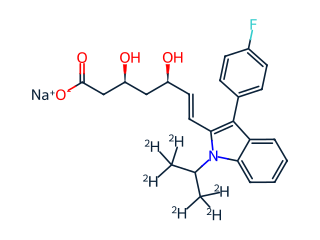
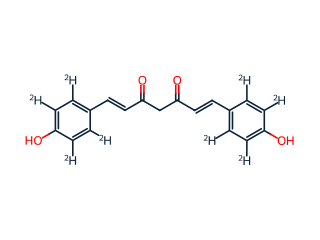
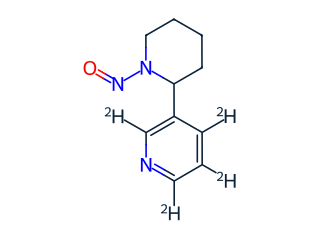
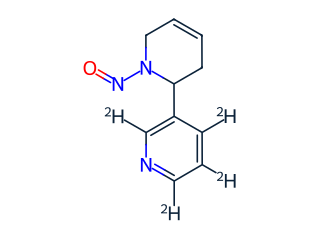

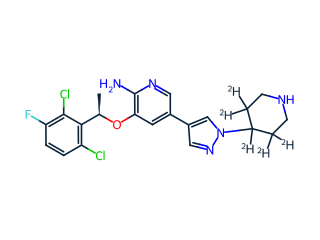
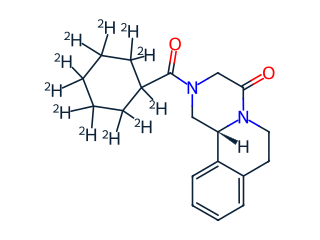
(R)-Crizotinib-d5 (piperidine-3,3,4,5,5-d5)
- CAS
- 1395950-84-1
- Formula
- C21H22Cl2FN5O
- MW
- 455.4 g/mol
VQ-029940

FAQs
How much mass difference should an internal standard have?
At least 3 Da is a common rule of thumb, so that the analyte's natural isotope peaks do not interfere with the internal standard signal.
What is isotopic enrichment?
The percentage of atoms at the labelled positions that are the heavy isotope, for example 99 atom % D.
Are deuterated compounds radioactive?
No. Deuterium, carbon-13 and nitrogen-15 are stable isotopes. Radioactive labels such as tritium or carbon-14 are a separate category.
Other grades
HPLC GradeGC GradeAR Grade (Analytical Reagent)ACS GradeLR Grade (Laboratory Reagent)Extra Pure GradeMolecular Biology GradeSpectroscopy GradeLC-MS GradeIP Grade (Indian Pharmacopoeia)BP Grade (British Pharmacopoeia)USP Grade (United States Pharmacopeia)Ph. Eur. Grade (European Pharmacopoeia)Food Grade (FCC)Technical GradeElectronic GradePharmaceutical Secondary Reference Standards
Need a price, a spec or a custom compound?
Send us your list — product names or CAS numbers, grade, quantity and destination. Our team replies with a formal quotation, COA and lead time.