
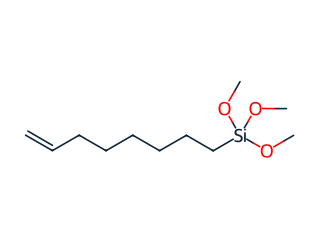
(7-Octen-1-yl)trimethoxysilane, technical grade, 80%
- CAS
- 52217-57-9
- Formula
- C11H24O3Si
- MW
- 232.39 g/mol
VQ-011086
Technical or commercial grade chemicals for industrial processes, where cost and bulk availability matter more than trace-level purity.
Technical grade, also called commercial or industrial grade, is the grade in which most chemicals are produced and traded in bulk. The specification focuses on the parameters that matter for industrial use, such as main component content, appearance, moisture and sometimes one or two key impurities, and it generally does not limit trace contaminants. Purity can be high, sometimes above 99% for large-volume commodity chemicals, but it is not guaranteed at the level of reagent grades and may vary more between lots and producers.
| Parameter | Example: technical grade sodium hydroxide flakes |
|---|---|
| NaOH content | ≥ 97 to 98% |
| Sodium carbonate | ≤ 0.5 to 1% |
| Sodium chloride | ≤ 0.1 to 0.5% |
| Iron | ≤ 10 to 50 ppm |
Values in the table are typical of the grade. The limits that apply to a given product are those stated on its specification and lot Certificate of Analysis.
LR grade is a laboratory grade with a more consistent specification and cleaner packaging, suitable for bench work. AR and ACS grades add tight impurity limits for analysis. Food and pharmacopoeial grades require production under food or pharmaceutical quality systems and must never be substituted with technical grade. Practical grade is a term used by some suppliers for organic chemicals of modest purity intended for synthesis, broadly between technical and LR.
Because specifications vary, agree the parameters that matter for your process before ordering, and ask for a lot COA covering them. For example, a metal finisher may care about iron and chloride, while a water treatment plant may care about heavy metals in coagulants because of drinking water standards. We quote technical-grade products with the specification written out, so there is no ambiguity about what a lot will meet.
For bulk technical-grade orders, we can also advise on packaging, such as bags, drums or IBCs, and on dangerous goods classification for export.




Not necessarily. Many technical-grade chemicals are high purity, but trace impurities are not specified or limited as they are in reagent grades.
For cleaning or non-critical preparations, possibly. For experiments and analysis, LR or higher is advisable because of lot-to-lot variability.
No. Food and pharmaceutical uses require food-grade or pharmacopoeial materials produced under appropriate quality systems.
Send us your list — product names or CAS numbers, grade, quantity and destination. Our team replies with a formal quotation, COA and lead time.