
Grade guide
Electronic Grade chemicals
Ultra-high-purity acids, solvents and etchants with metal impurities at ppb or ppt level and low particle counts, for semiconductor and electronics work.
What electronic grade means
Electronic grade, also called semiconductor grade, describes chemicals purified for the manufacture of semiconductors, displays, photovoltaics and printed circuit boards. Metal contaminants at parts-per-billion levels can alter the electrical properties of silicon, and particles can cause defects in fine circuit features. The grade therefore specifies individual trace metals, anions and particle counts at levels far below those of reagent grades, and requires cleanroom-compatible packaging.
Many products are specified against SEMI standards, published by the industry association SEMI, which define tiers of purity for process chemicals. Higher tiers carry lower limits, down to parts-per-trillion for the most critical applications. Names such as VLSI, ULSI or CMOS grade are used by some manufacturers for their own tiers.
Typical specification profile
| Parameter | Typical range (depending on tier) |
|---|---|
| Assay | Stated to narrow limits, e.g. hydrogen peroxide 30 to 32% |
| Individual metals (Na, K, Fe, Cu, Al, Ni and others) | ≤ 10 ppb down to ≤ 10 ppt each |
| Anions (chloride, sulfate, nitrate, phosphate) | Low ppb to ppm |
| Particles (≥ 0.2 or 0.5 µm) | Specified maximum count per mL |
Values in the table are typical of the grade. The limits that apply to a given product are those stated on its specification and lot Certificate of Analysis.
Where it is used
- Wafer cleaning (for example, SC-1 and SC-2 cleans using ammonia, peroxide and hydrochloric acid)
- Wet etching with hydrofluoric, nitric, phosphoric and buffered oxide etchants
- Photoresist stripping and development with solvents and tetramethylammonium hydroxide
- Trace metal analysis by ICP-MS, where blank levels must be minimal
How it differs from neighbouring grades
AR and ACS grades limit metals at ppm levels, around three orders of magnitude higher than electronic grades. Trace-metal analysis grades for ICP-MS approach electronic-grade metal limits but may not specify particles. Technical grade products are unsuitable. Packaging is part of the grade: electronic chemicals are filled into pre-cleaned, fluoropolymer or high-purity polyethylene containers, often in cleanroom conditions, and quality can be lost if decanted into ordinary bottles.
Sourcing
Electronic-grade supply is highly application-specific. Send us the SEMI grade or the full list of metal, anion and particle limits you require, and we will confirm what can be met and in which packaging.
20 Electronic Grade products


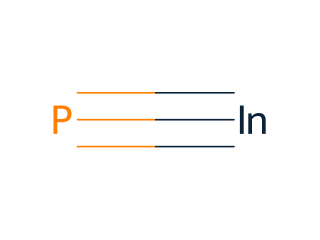
Indium phosphide substrates, semi insulating, contains iron as dopant, diam. × thickness 50.5 mm × 350 μm
- CAS
- 22398-80-7
- Formula
- InP
- MW
- 145.79 g/mol
VQ-018041

Poly(3-hexylthiophene-2,5-diyl) electronic grade, 99.995% trace metals basis, average Mn 15,000-45,000
- CAS
- 104934-50-1
- Formula
- (C10H14S)n
- MW
- 15000 g/mol
VQ-018834
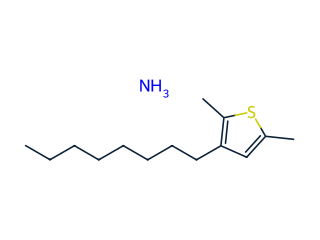
Poly(3-octylthiophene-2,5-diyl), electronic grade, 99.995%
- CAS
- 104934-51-2
- Formula
- C14H27NS
- MW
- 241.44 g/mol
VQ-018835

Poly(acrylic acid) solution, average Mw ~2,000, 50 wt. % in H2O, electronic grade
- CAS
- 9003-01-4
- Formula
- (C3H4O2)n
VQ-018839

Silicon wafer, P/N-type semi insulating, diam. × thickness 3 in x 500-600 μm
- CAS
- 7440-21-3
- Formula
- Si
- MW
- 28.09 g/mol
VQ-018124
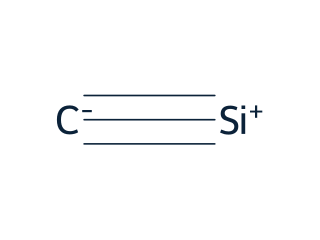
Silicone carbide, ingot, Semi-insulating, diam. x thickness 3 in. x 10 mm
- CAS
- 409-21-2
- Formula
- CSi
- MW
- 40.1 g/mol
VQ-018415

FAQs
What are SEMI grades?
Purity tiers for process chemicals defined in standards published by SEMI, the semiconductor industry association, with progressively lower metal and particle limits.
Can electronic grade acids be used for ICP-MS?
Yes, they are often used as low-blank acids for trace metal analysis. Trace-metal grades designed for ICP-MS are an alternative.
Why does packaging matter for electronic grade?
Containers can leach metals and shed particles. Electronic-grade chemicals are packed in pre-cleaned high-purity containers to protect the specification.
Other grades
HPLC GradeGC GradeAR Grade (Analytical Reagent)ACS GradeLR Grade (Laboratory Reagent)Extra Pure GradeMolecular Biology GradeSpectroscopy GradeLC-MS GradeIP Grade (Indian Pharmacopoeia)BP Grade (British Pharmacopoeia)USP Grade (United States Pharmacopeia)Ph. Eur. Grade (European Pharmacopoeia)Food Grade (FCC)Technical GradeDeuterated & Stable-Isotope-Labelled CompoundsPharmaceutical Secondary Reference Standards
Need a price, a spec or a custom compound?
Send us your list — product names or CAS numbers, grade, quantity and destination. Our team replies with a formal quotation, COA and lead time.