
Grade guide
HPLC Grade chemicals
Solvents and reagents made for high-performance liquid chromatography: low UV absorbance, low residue, low water and filtered to remove particles.
What HPLC grade means
HPLC grade describes solvents, and some additives, that are purified and tested specifically for use as mobile phases in high-performance liquid chromatography. Ordinary reagent solvents may have acceptable assay but still contain trace UV-absorbing impurities, dissolved stabilisers, particulates or non-volatile residue that show up as baseline drift, ghost peaks and blocked frits. HPLC grade addresses those failure modes directly.
Typical specifications
| Parameter | Typical requirement |
|---|---|
| Assay (GC) | ≥ 99.8 to 99.9% |
| UV cutoff / absorbance | Specified at several wavelengths, e.g. acetonitrile ≤ 0.02 AU at 200 nm. Methanol cutoff about 205 nm |
| Water (Karl Fischer) | ≤ 0.02 to 0.05% |
| Residue on evaporation | ≤ 1 to 5 mg/L |
| Filtration | Typically through a 0.2 µm membrane |
| Gradient suitability | Tested for absence of interfering peaks in a blank gradient (gradient-grade products) |
Values in the table are typical of the grade. The limits that apply to a given product are those stated on its specification and lot Certificate of Analysis.
Where it is used
- Mobile phases for reversed-phase and normal-phase HPLC and UHPLC with UV or PDA detection
- Sample and standard preparation for assay and related-substances methods
- Pharmacopoeial methods that specify chromatography-grade solvents
- Preparative chromatography where fractions are evaporated and residue matters
How it differs from neighbouring grades
AR or ACS grade solvents meet purity and impurity limits but are not necessarily tested for UV transmission or gradient blanks, so they can work for isocratic methods at longer wavelengths but are a risk at low UV. LC-MS grade goes further than HPLC grade by limiting metal ions, which form adducts and suppress ionisation, and by testing for background ions in the mass spectrometer. Spectroscopy grade is optimised for optical transparency in cuvettes rather than chromatographic behaviour. If your method runs at low wavelengths or uses gradients, HPLC or gradient grade is the practical minimum.
Handling tips
Keep bottles tightly closed, since acetonitrile and methanol absorb water and tetrahydrofuran can form peroxides once any stabiliser is depleted. Degas and use promptly after opening, and avoid filtering through membranes that can leach extractables.
Ordering HPLC grade solvents
We supply HPLC and gradient-grade acetonitrile, methanol, water, tetrahydrofuran, isopropanol, n-hexane and other common mobile-phase solvents in glass bottles and larger returnable or single-use containers. Each lot COA reports the UV absorbance values, water content and residue, so you can compare lots before they reach your instrument.
387 HPLC Grade products

(Diphenyl-2-thienylphosphine-κP)[2-(4-methoxyphenyl)ethynyl]gold, ≥98% (HPLC)
- CAS
- 1527513-89-8
- Formula
- C25H20AuOPS
- MW
- 596.43 g/mol
VQ-011305
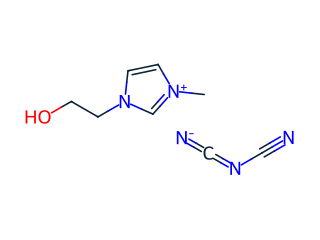
1-(2-Hydroxyethyl)-3-methylimidazolium dicyanamide, 97%, ≥96.5% (HPLC)
- CAS
- 1186103-47-8
- Formula
- C8H11N5O
- MW
- 193.21 g/mol
VQ-001410
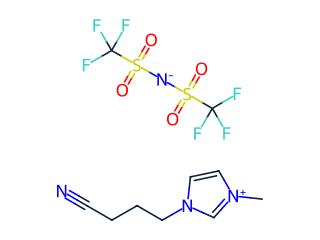
1-(3-Cyanopropyl)-3-methylimidazolium bis(trifluoromethylsulfonyl)amide, ≥98.5% (HPLC)
- CAS
- 778593-18-3
- Formula
- C10H12F6N4O4S2
- MW
- 430.4 g/mol
VQ-001412
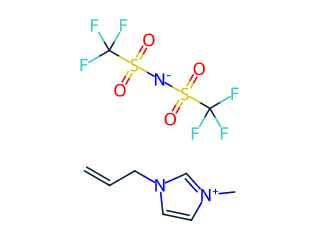
1-Allyl-3-methylimidazolium bis(trifluoromethylsulphonyl)imide, for HPLC, 98.5%
- CAS
- 655249-87-9
- Formula
- C9H11F6N3O4S2
- MW
- 403.3 g/mol
VQ-001416
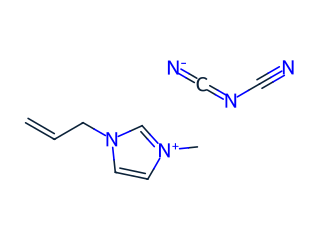
1-Allyl-3-methylimidazolium dicyanamide, ≥98.5% (HPLC)
- CAS
- 917956-73-1
- Formula
- C9H11N5
- MW
- 189.22 g/mol
VQ-001419
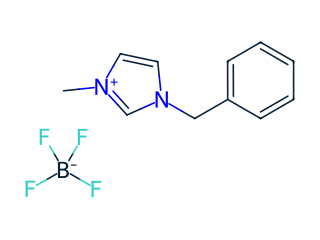
1-Benzyl-3-methylimidazolium tetrafluoroborate, ≥97% (HPLC)
- CAS
- 500996-04-3
- Formula
- C11H13BF4N2
- MW
- 260.04 g/mol
VQ-001423
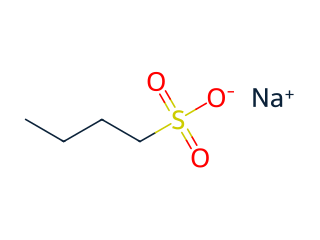
1-Butane sulfonic acid sodium salt anhydrous, AR, for HPLC ≥99%
- CAS
- 2386-54-1
- Formula
- C4H9NaO3S
- MW
- 160.17 g/mol
VQ-045528
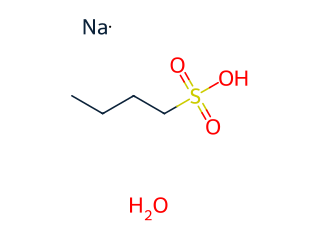
1-Butane sulphonic acid sodium salt monohydrous, for HPLC ≥99.00%
- CAS
- 127791-51-9
- Formula
- C4H12NaO4S
- MW
- 179.19 g/mol
VQ-020564
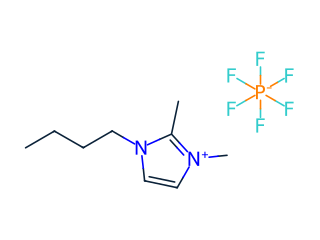
1-Butyl-2,3-dimethylimidazolium hexafluorophosphate, ≥97% (HPLC)
- CAS
- 227617-70-1
- Formula
- C9H17F6N2P
- MW
- 298.21 g/mol
VQ-001439
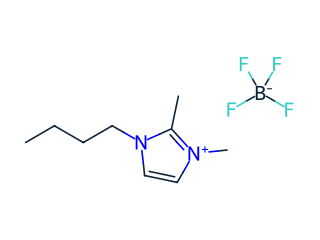
1-Butyl-2,3-dimethylimidazolium tetrafluoroborate, for electrochemistry, ≥99% (HPLC)
- CAS
- 402846-78-0
- Formula
- C9H17BF4N2
- MW
- 240.05 g/mol
VQ-001441
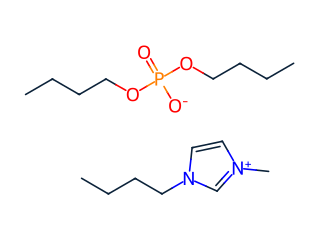
1-Butyl-3-methyalimidazolium dibutyl phosphate, ≥96% (HPLC)
- CAS
- 663199-28-8
- Formula
- C16H33N2O4P
- MW
- 348.42 g/mol
VQ-001442
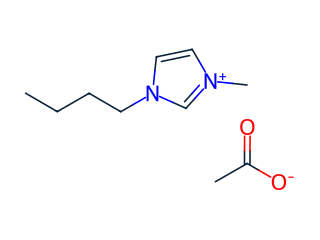
1-Butyl-3-methylimidazolium acetate, ≥96% (HPLC)
- CAS
- 284049-75-8
- Formula
- C10H18N2O2
- MW
- 198.26 g/mol
VQ-001444
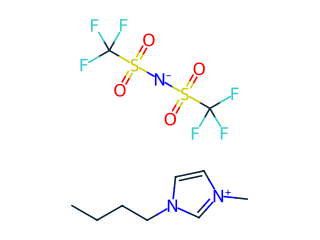
1-Butyl-3-methylimidazolium bis(trifluoromethylsulfonyl)imide, for HPLC 99%
- CAS
- 174899-83-3
- Formula
- C10H15F6N3O4S2
- MW
- 419.4 g/mol
VQ-001445
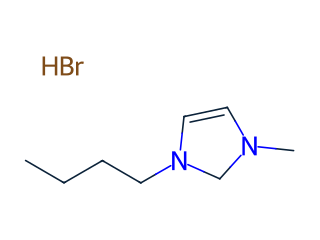
1-Butyl-3-methylimidazolium bromide, ≥97% (HPLC)
- CAS
- 85100-77-2
- Formula
- C8H17BrN2
- MW
- 221.14 g/mol
VQ-001447
1-Butyl-3-methylimidazolium bromide, ≥98.5% (HPLC)
- CAS
- 85100-77-2
- Formula
- C8H17BrN2
- MW
- 221.14 g/mol
VQ-001448
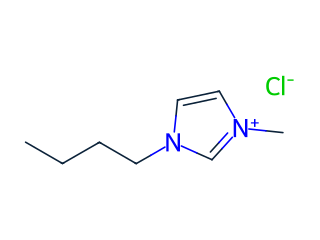
1-Butyl-3-methylimidazolium chloride, 98% (HPLC)
- CAS
- 79917-90-1
- Formula
- C8H15ClN2
- MW
- 174.67 g/mol
VQ-001449
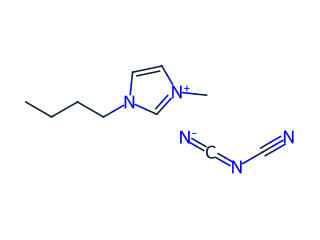
1-Butyl-3-methylimidazolium dicyanamide, ≥97% (HPLC)
- CAS
- 448245-52-1
- Formula
- C10H15N5
- MW
- 205.26 g/mol
VQ-001452
FAQs
Can I use AR grade methanol for HPLC?
Sometimes, for isocratic methods at longer wavelengths, but AR grade is not tested for UV absorbance or gradient blanks. For low-wavelength or gradient work, HPLC grade avoids baseline and ghost-peak problems.
Is HPLC grade the same as gradient grade?
Gradient grade is a subset of HPLC grade that has additionally been run as a blank gradient to show no interfering peaks. It is preferred for gradient methods and trace analysis.
Is HPLC grade suitable for LC-MS?
It may work, but LC-MS grade is recommended because it limits metal ions and background contaminants that cause adducts and ion suppression.
Other grades
GC GradeAR Grade (Analytical Reagent)ACS GradeLR Grade (Laboratory Reagent)Extra Pure GradeMolecular Biology GradeSpectroscopy GradeLC-MS GradeIP Grade (Indian Pharmacopoeia)BP Grade (British Pharmacopoeia)USP Grade (United States Pharmacopeia)Ph. Eur. Grade (European Pharmacopoeia)Food Grade (FCC)Technical GradeElectronic GradeDeuterated & Stable-Isotope-Labelled CompoundsPharmaceutical Secondary Reference Standards
Need a price, a spec or a custom compound?
Send us your list — product names or CAS numbers, grade, quantity and destination. Our team replies with a formal quotation, COA and lead time.